(一) fread 整数输入模板
一次读入大量整数时,可以先把一批字符读进缓冲区,再逐个解析。下面按空格或换行分隔整数,用 long long 保存解析结果;先看字符怎样组成一个数,再看缓冲区怎样补充数据。
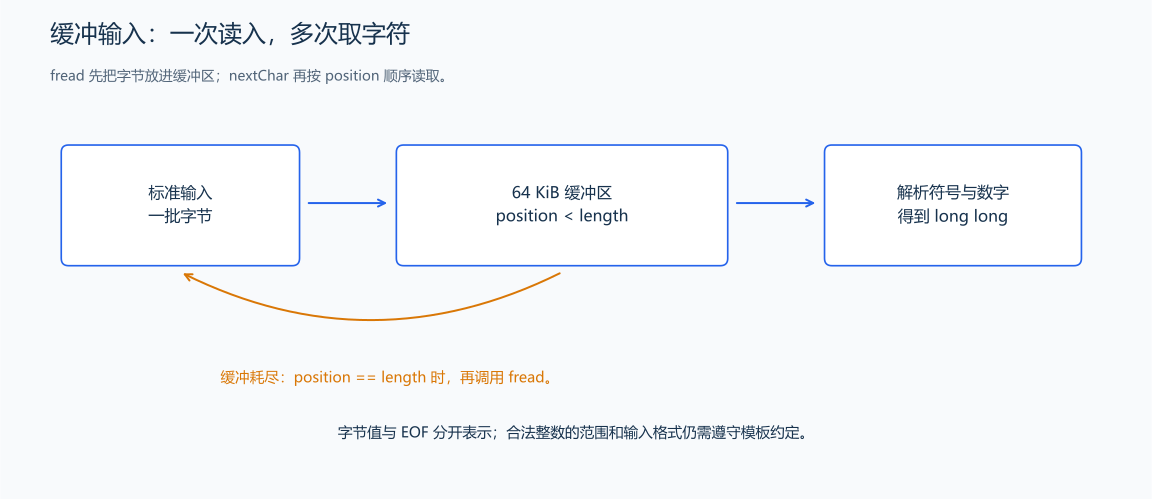
数据先读进缓冲区,解析函数再逐字节取用;缓冲耗尽时重新填充,而不是每个字符都发起一次读取。
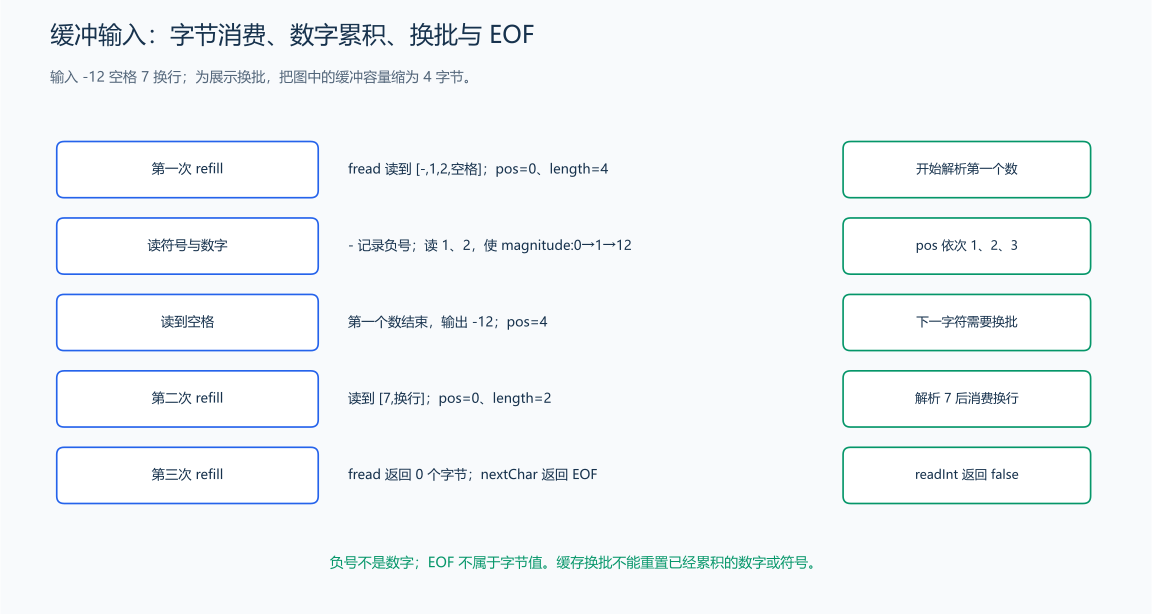
图把缓冲容量缩小为 4 字节来手算,实际代码使用 64 KiB。输入 -12 7 后换行:先读出负号,再用 value=value*10+digit 得到 1、12;空格结束第一个整数,乘符号后得到 -12。下一次读数时缓冲已耗尽,重新填入 7 与换行,得到 7;再次填充读到 0 字节才返回 EOF。EOF 是读取状态,不能当成数字或普通空白继续处理。
本例用到的输入接口: <cstdio> 提供 fread、stdin、EOF 和 printf。fread(buffer,1,count,stdin) 最多读取 count 个一字节单元,返回实际读到的单元数;stdin 是标准输入来源,EOF 表示读不到下一个字符。<cctype> 的 isspace 判断空白,代码先识别 EOF,再把读到的字节转成 unsigned char 交给它。std::size_t 是无符号的大小类型;字符用 int 接收,可以同时保存字节值和 EOF。printf("%lld\n",value) 输出 long long 整数。本章从读入到输出都使用 C 输入输出接口。
#include <cctype>
#include <cstdio>
#include <limits>

class FastInput {
private:
    static constexpr std::size_t bufferSize = 1 << 16;
    unsigned char buffer_[bufferSize];
    std::size_t position_ = 0;
    std::size_t length_ = 0;

    int nextChar() {
        if (position_ == length_) {
            // 当前缓冲区耗尽时,一次读入最多 64 KiB 字节。
            length_ = std::fread(buffer_, 1, bufferSize, stdin);
            position_ = 0;
            if (length_ == 0) {
                return EOF;
            }
        }
        return buffer_[position_++];
    }

public:
    bool read(long long &result) {
        int ch = nextChar();
        while (ch != EOF && std::isspace(static_cast<unsigned char>(ch))) {
            ch = nextChar();
        }
        if (ch == EOF) {
            return false;
        }
        bool negative = ch == '-';
        if (ch == '-' || ch == '+') {
            ch = nextChar();
        }
        if (ch < '0' || ch > '9') {
            return false;
        }
        unsigned long long value = 0;
        // 先累计绝对值,才能表示 long long 最小值对应的幅度。
        while (ch >= '0' && ch <= '9') {
            value = value * 10 + static_cast<unsigned int>(ch - '0');
            ch = nextChar();
        }
        auto limit = static_cast<unsigned long long>(std::numeric_limits<long long>::max());
        if (negative && value == limit + 1) {
            // 最小负数不能通过“先转为正的 long long 再取负”获得。
            result = std::numeric_limits<long long>::min();
        } else {
            result = static_cast<long long>(value);
            if (negative) {
                result = -result;
            }
        }
        return true;
    }
};
调用片段(与上面的类放在同一个源文件中):
int main() {
    FastInput input;
    long long value;
    while (input.read(value)) {
        // 一直读到 EOF;输入由 FastInput 统一接管。
        std::printf("%lld\n", value);
    }
}
read 跳过空白,读取负号和数字,并把结果写入参数;没有下一个整数时返回 false,外层循环随即结束。之后的读取继续从该对象保存的缓冲位置开始。